
Transition period just before the rains
Rains November to April
Two major rivers, the Sand river and the Sabie river. Only the Sabie river is permanent
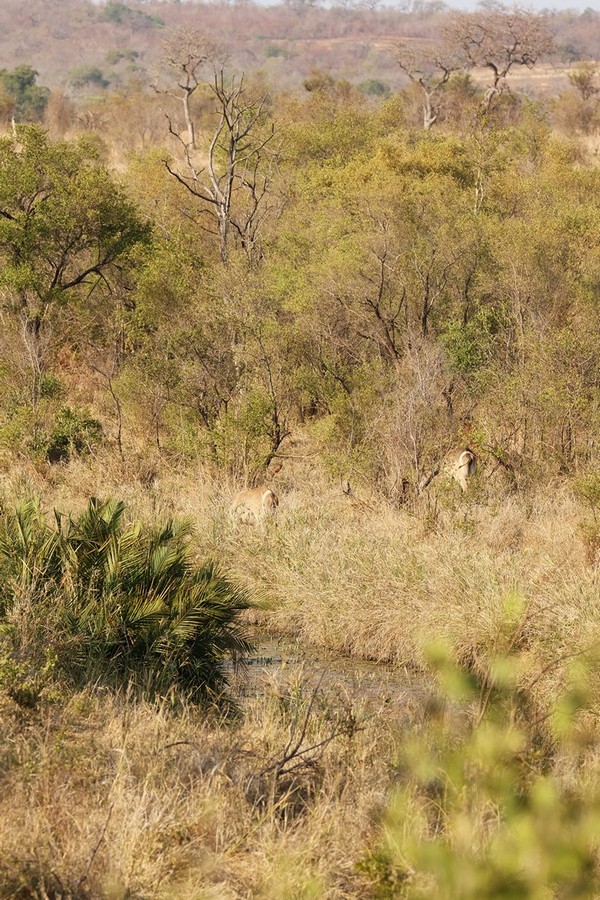
A view across a wooded valley, with some waterbuck feeding by the stream
Sabi Sands is 650km2
Located in Mpumalanga province, South Africa, directly bordering the southwestern edge of Kruger National Park
The reserve is world reknowned for its leopard sightings, and also is quite a scenic park with woodland and Savannah
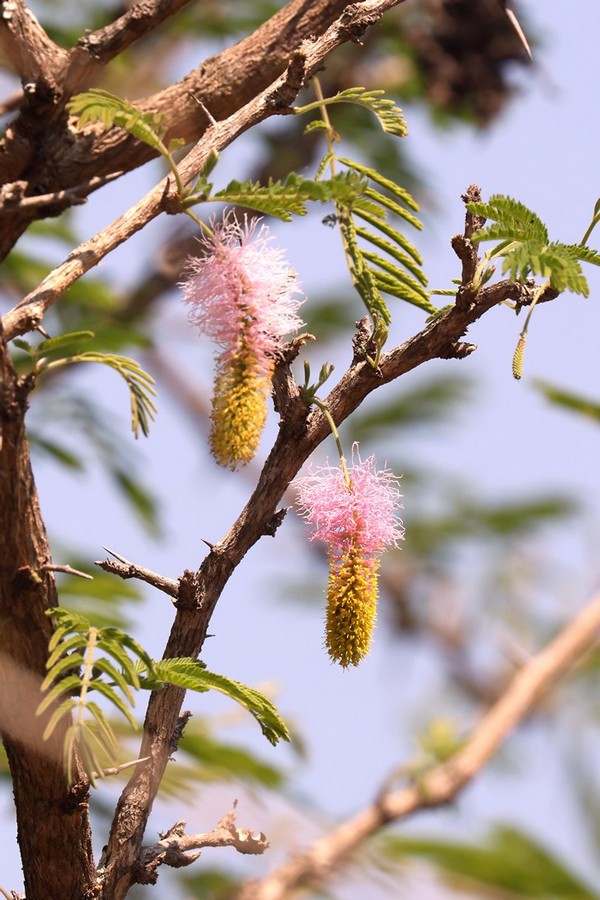
These are the flowers of the sickle bush, also known as the Kalahari Christmas tree
There are about 145 species of mammals
It has all of Africa's Big Five as residents
Good place to spot rhinos and nyala
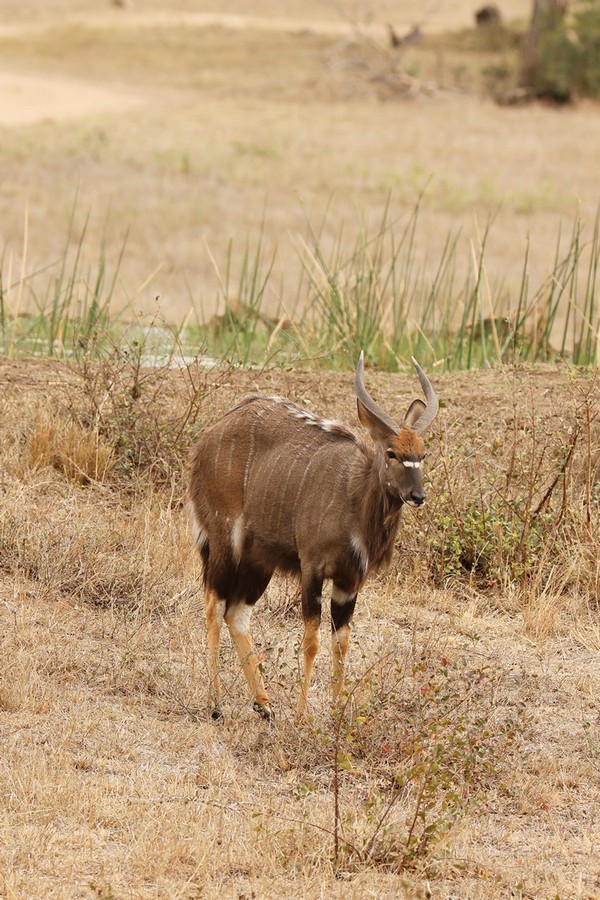
This is where I saw my first Nyala. They are mixed browswers and grazers
Tsetse flies are not present
Sits on ancient granite and biotite gneiss rocks older than 3.5 billion years
Visitor numbers are very limited
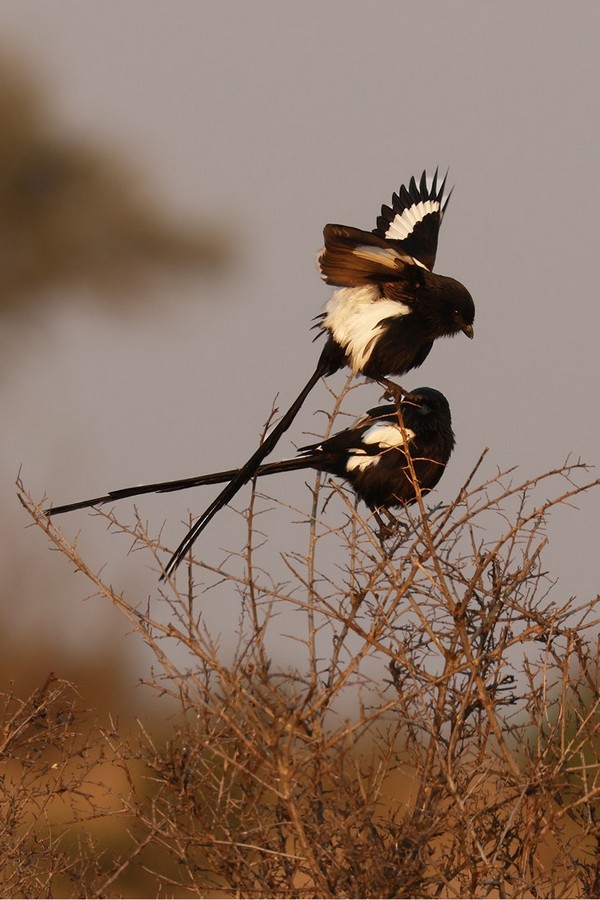
Magpie shrikes are very common
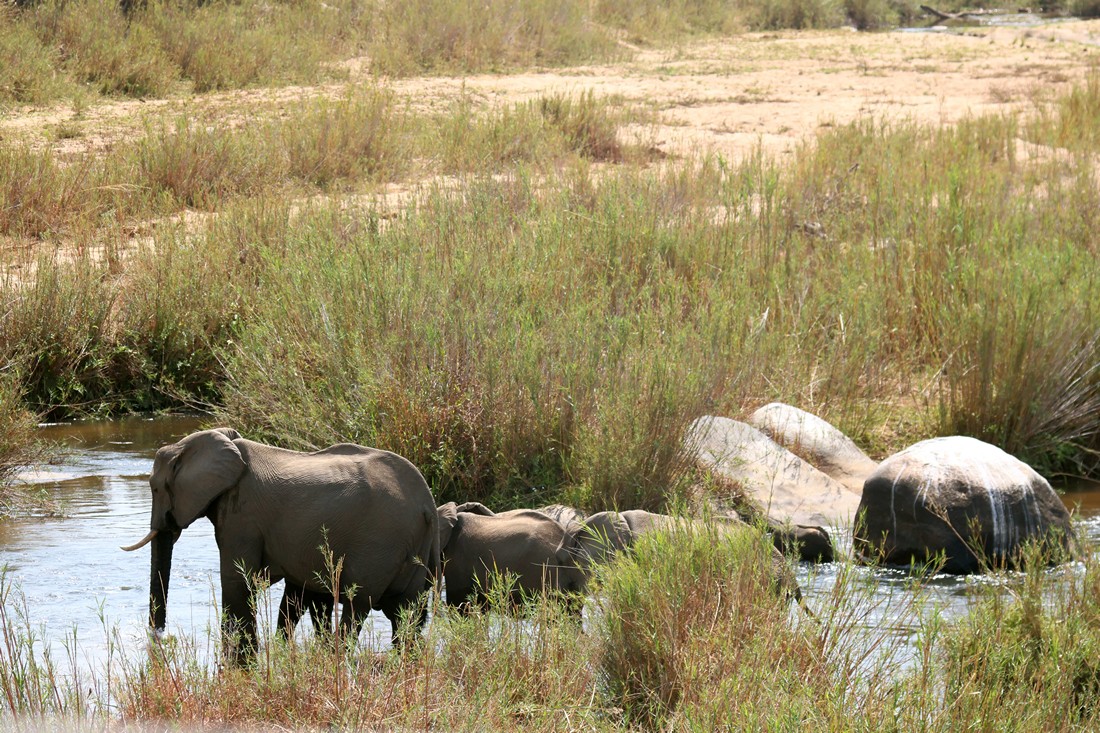
The Sabie river is on the south western border
of the reserve. Plenty of wildlife there
Sabi Sands is one of South Africa's oldest game reserves, created in 1934, and changing its designation to the Sabi Sands private Game Reserve in 1948. The naming is a bit confusing as it is split into several small reserves including Dulini,Lion Sands, Londolozi, MamaMala, Sabi Sabi, Singita and Ulusaba. Sabi Sands (map).
Because of the worry of spreading foot and mouth disease, and the threat of poachers, fences were built between Sabi Sands and the Kruger Nayional Park in 1961, Fences were fianlly removed in 1993 and so game can freely cross between the two areas.
The reserve now has a 50km long unfenced border with the Kruger National Park
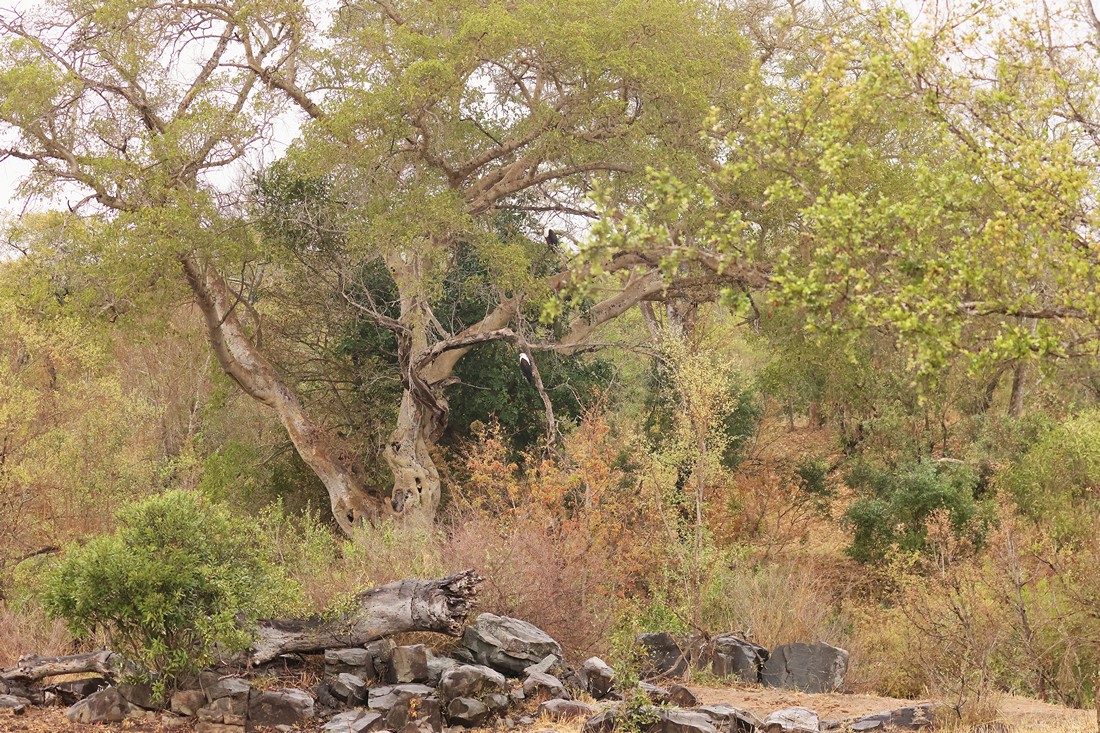
The dry sandy soil encourages savannah with
patches of woodland, more so near the rivers.
Spot the fish eagles
The reserve gets its name from the two main rivers in the reserve - the Sand river flowing through it and the Sabie river, which is on its southern boundary. The Sand river (or Manyaleti river) can experience dry periods in winter, but there are always pools and there is subsuface water as well. The Sabie river is one of the few permanant rivers in the Kruger(
The Sabi Sands Game Reserve receives an average annual rainfall of about 581 mm (23 inches). The dry season is from May to October, with occasional light showers. During this time wildlife congregates around available water. Transition occurs in September and October, with some rain and varying temperatures. For instance the day we arrived it was only 16C and it rained later on, but the next day was sunny and temperatures were neaer 30C' November to April is the wet season, when the weather turns hot and more humid. The rains peak in January and drop off in March and April
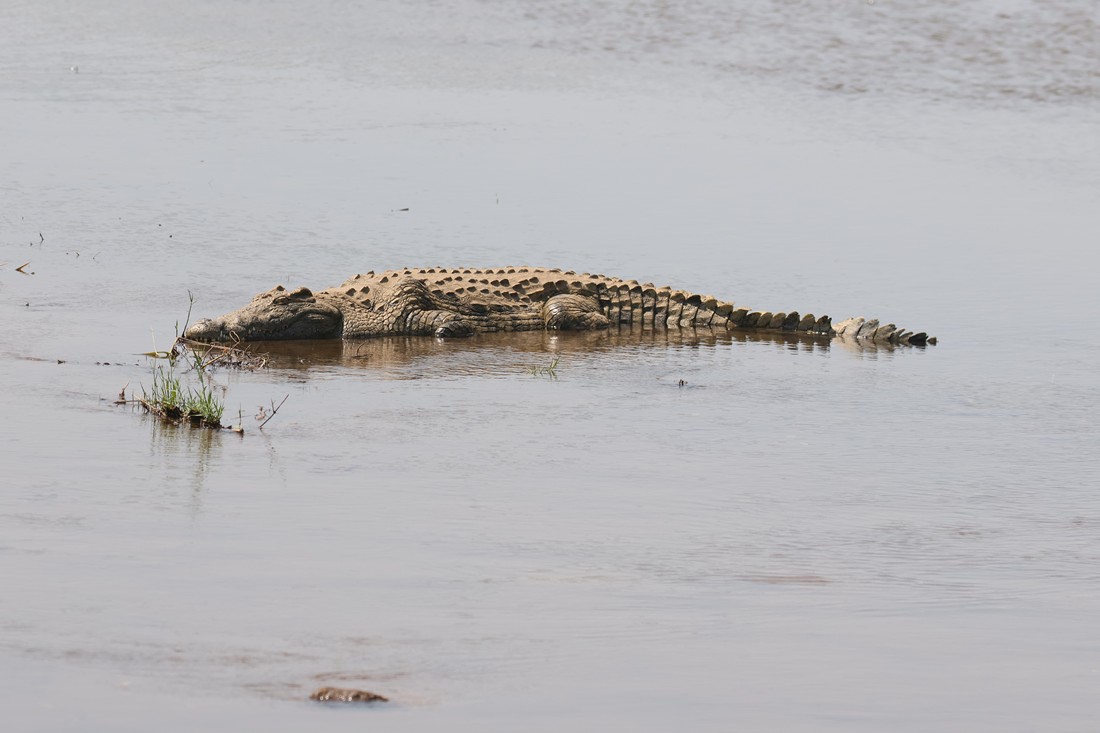
There are some really big crocodiles in the
Sabi river. They can easily be seen from the
bridges near the reserve entrance
Vegetation consists of large areas of well grown trees and bush and other areas of open savannah There are lots of Umbrella thorns, knob thorns, fever trees, sycamore figs, jackalberries, and marulas, leadwoods and sausage tress to name a few. There is usually dense growth along the river lines. with many Jackalberry, Mahogany and the Weeping Boer-bean trees
Sycamore figs, called Nkuwa in the localShangaan language, are known as the Queen of trees, as they such an important food source to many birds and mammals.
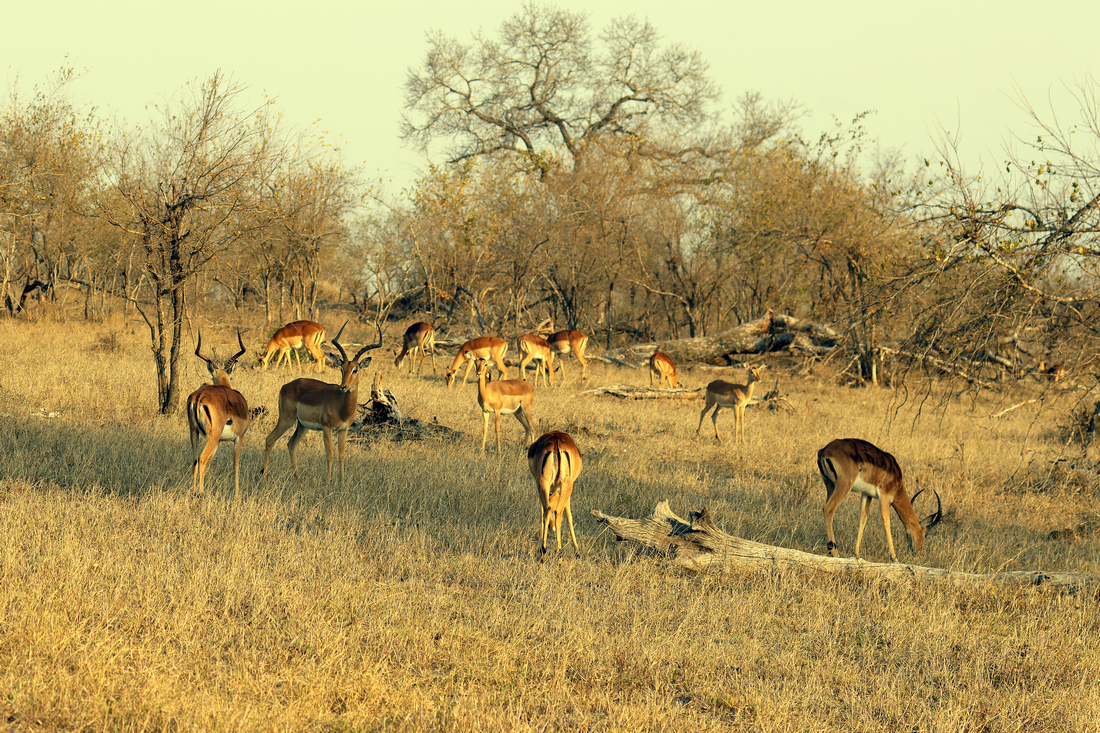
The mixed bush and open savannah supports
a large population of impalas. It's no surprise
that there are a lot of leopards here
There are lots of different types of grasses in the open areas, including white and blue buffalo grass, red grass, spear grass and vlei bristle grass, and many others. Buffalos like spear grass and finger grass whereas zebras can cope with tougher varieties such as red grass. Roan and sable go for taller high quality varieties like newer red grass and blue buffalo grass. Overall they avoid competition by secting diferent parts and vaarieties of grasses.
Once the grasses are cropped short other species including white rhinocererouses and blue wildebeeste will take advantage of the new short growth. Impalas also eat short grass but as the area dries out they switch to browsing shrubs and seed pods.
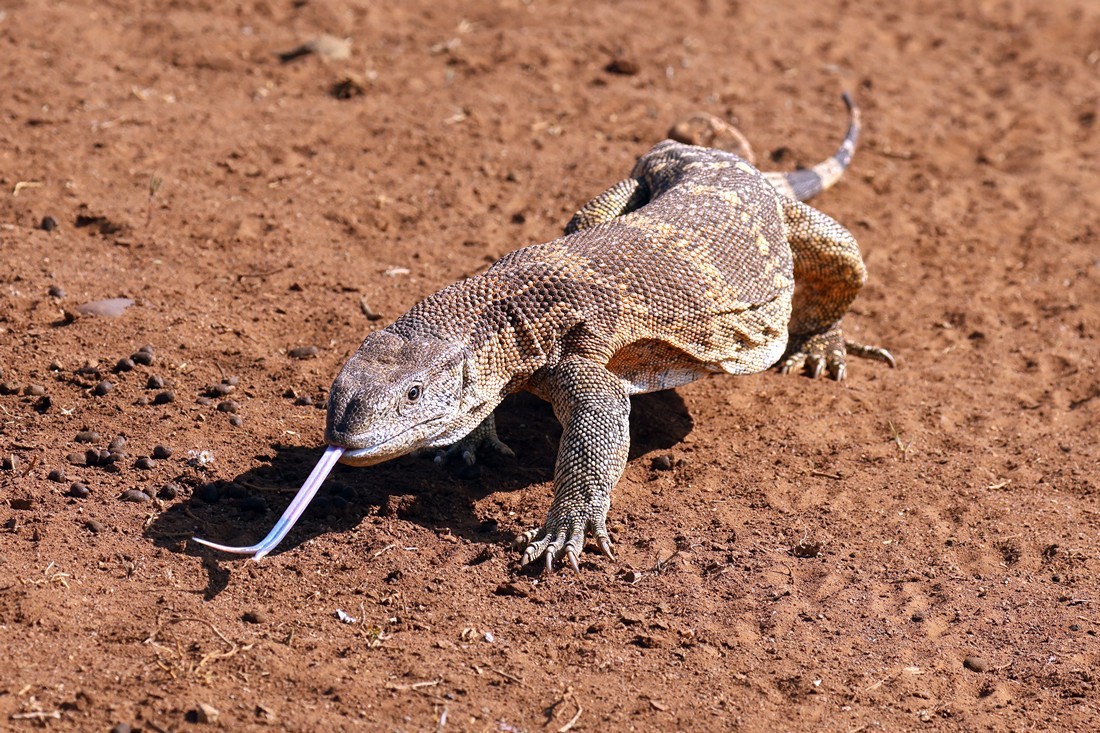
Rock monitors live in the drier bushveld,
rocky outcrops, holes in the ground and
cavities in trees
Sabi Sands is a 'Big Five' area, and also recognised as one of the best places in the world (another is Savuti in Botswana) to see the elusive leopard. Its probably worth a stay for that reason alone, as leopards are so difficult to spot, along with black rhinos. Fortuantely the white rhinos make it much easier to get your big five as they are generally grazing out in the open, whereas black rhino browse in thick bush.
There are plenty of other carnivores here. We saw a lot of lions and hyaenas, and there are some cheetahs as well.
About 145 species of mammals are listed as present and Sabi Sands has recorded over 500 species of birds with a mixture of resident and migratory species. The influx of migrants occurs in the wet season from November to April.
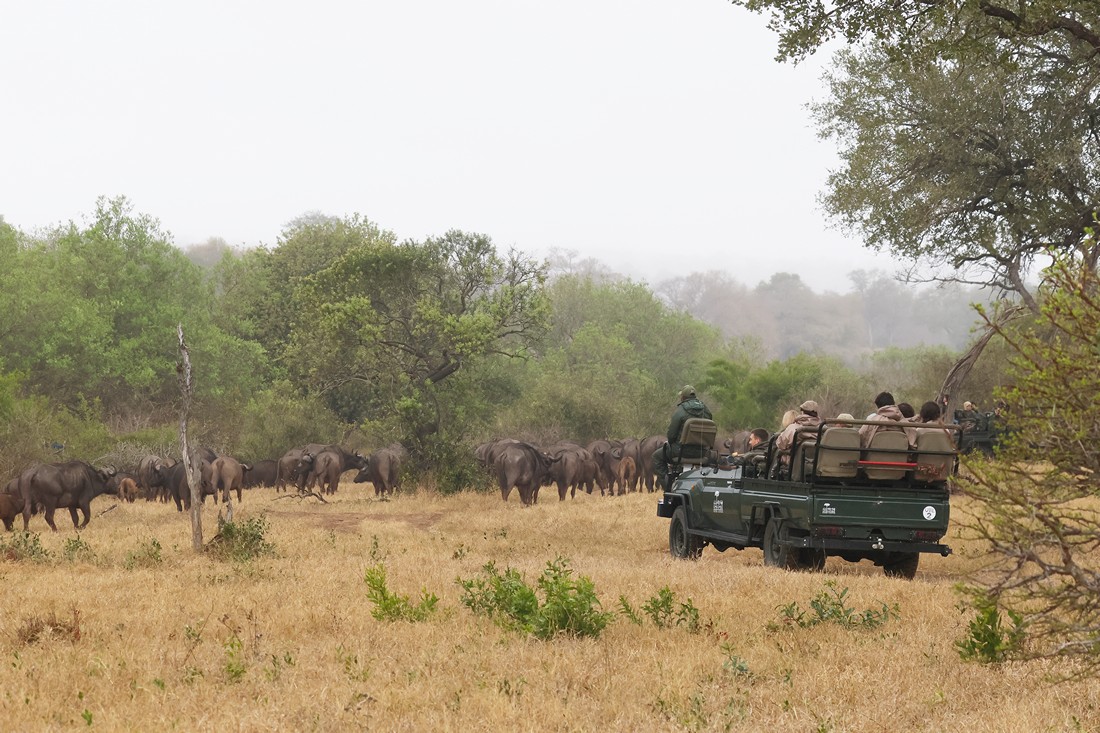
One of my main dislikes in southern Africa is
the tendency to pack as many people as
possible into a vehicle. This results in not
always having a clear view at a sighting, a lot
of movement when stopped which makes
photography more difficult, and a tendency not
to stay at a sighting for very long as some
people get bored and want to move on
The Sabi Sand Game Reserve rests primarily on the ancient Kaapvaal Craton, which dates back to over 3.5 billion years. This consists of ancient granite and biotite gneiss rocks, which when weathered produces sandy, well-drained soils that support dry woodland habitats (such as marulas and knob-thorns).
All of the reserves in Sabi Sands are privately owned and managed. One massive bonus is that there is a strict limit on the number of vehicles in each area, and you cannot cross to another private area unless you have been granted traverse rights. There are downsides; we were unable to approach a large herd of elephants is it was on the other side of a boundary road between us and Mala Mala. But on the whole the system works well.
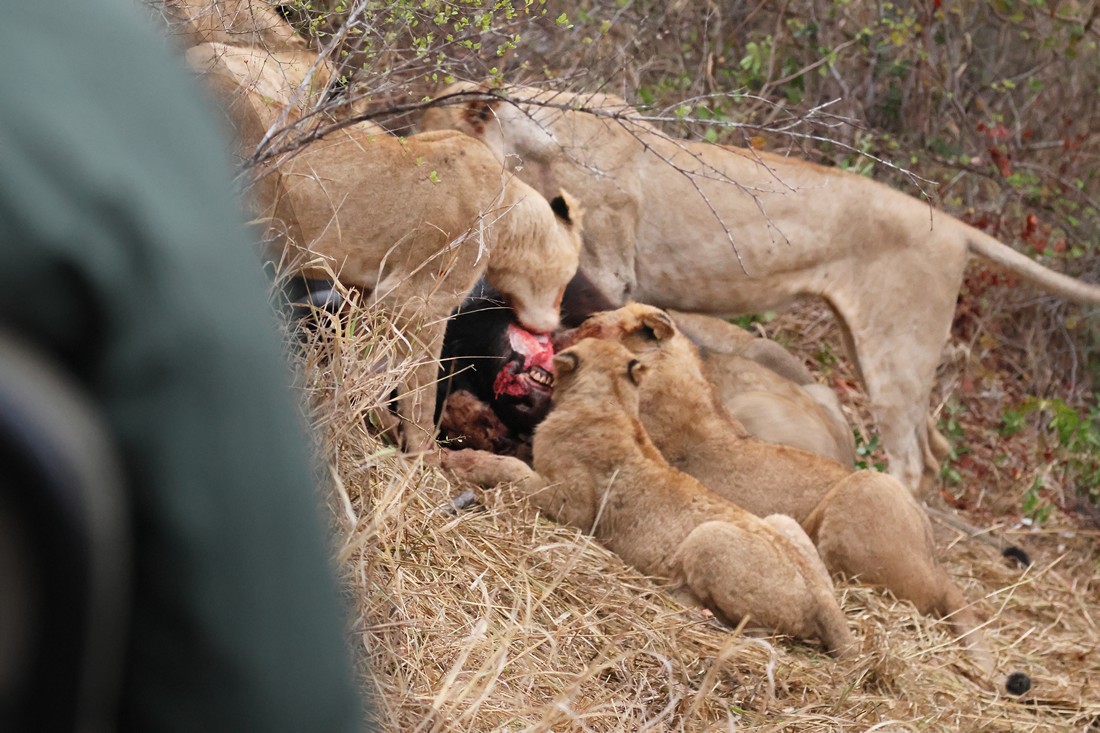
Here the spotter sitting on the bonnet of the
landcruiser has got right in my way and lost
me yet another shot. I don't see much
advantage in this as they do perfectly well in
east Africa without one. The guide sits next to
the driver
One thing I noticed was South African safaris tend to be in open topped cars with no sun or rain protection. We were given capes to wear when it rained. I found this to be an illogical setup, and it also hampers photography, It's far better in east Africa where cars have a sunroof at least.
I also found that South Africa safari companies tend to ram too many people into a vehicle, which means you get a lot of blocked views and movement which makes it harder for photography.
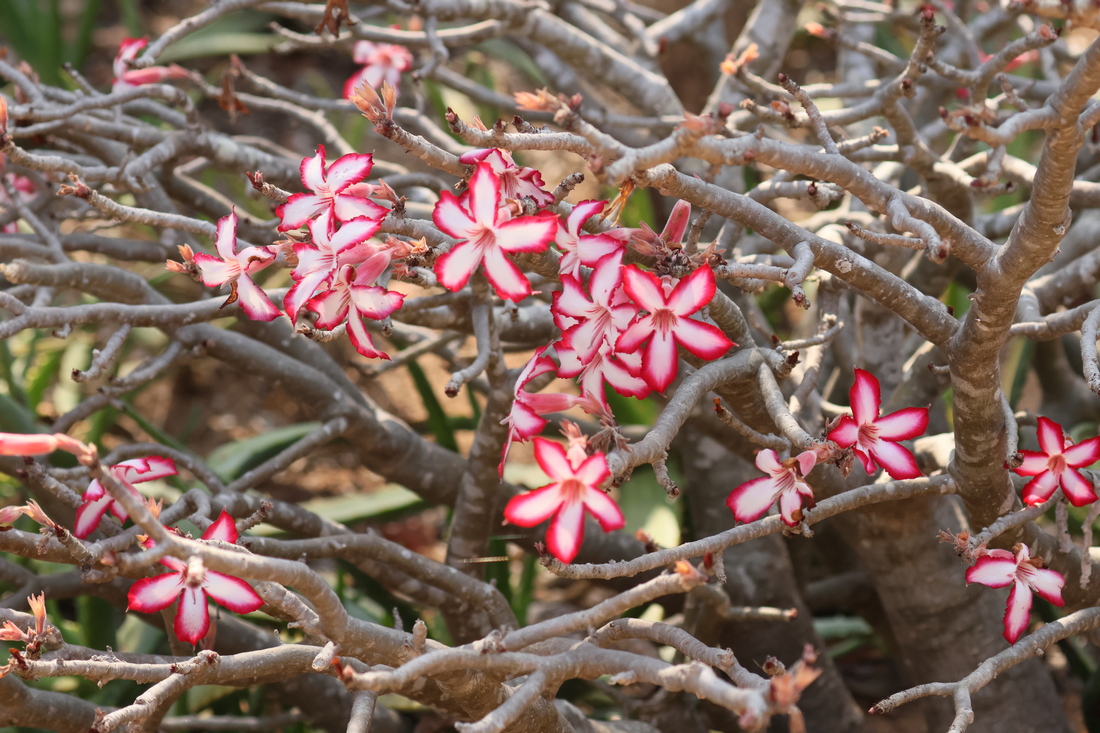
This is an impala lily also known as the
Sabi star. Flowers appear on bare branches
in the dry season. The plant contains
poisonous sap used in local arrow poisons
The most ridiculous is where the spotter sits right on the bonnet of the car (and they do perfectly well without this in east Africa) and generally gets in the way of my forward view, and causes me to miss a few shots.
Generally the photographic opportunities are excellent, due to the wide variety of animals and plants, which are habituated to tourists, combined with some very picturesque backdrops. As it is private land you can drive off road if necessary.